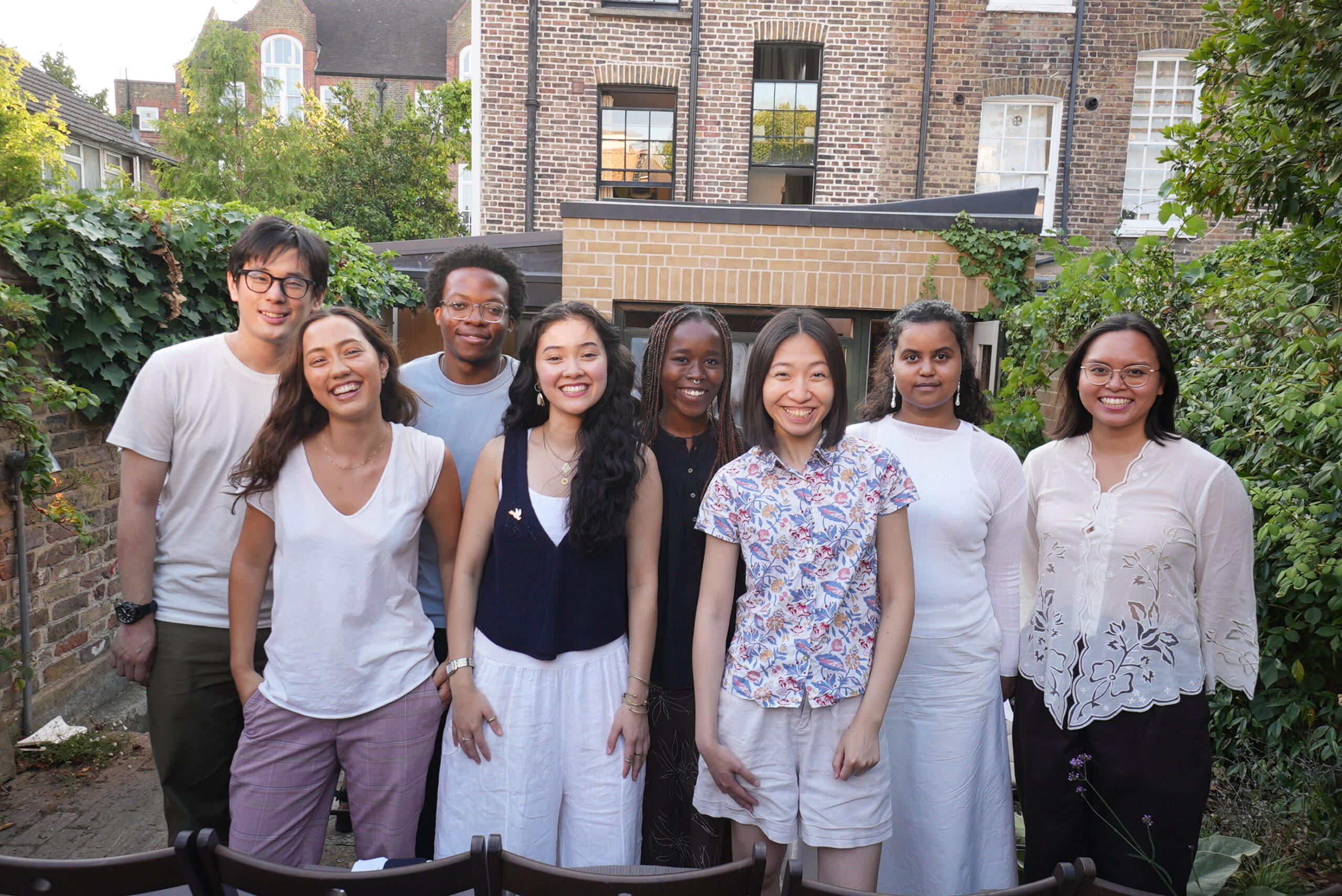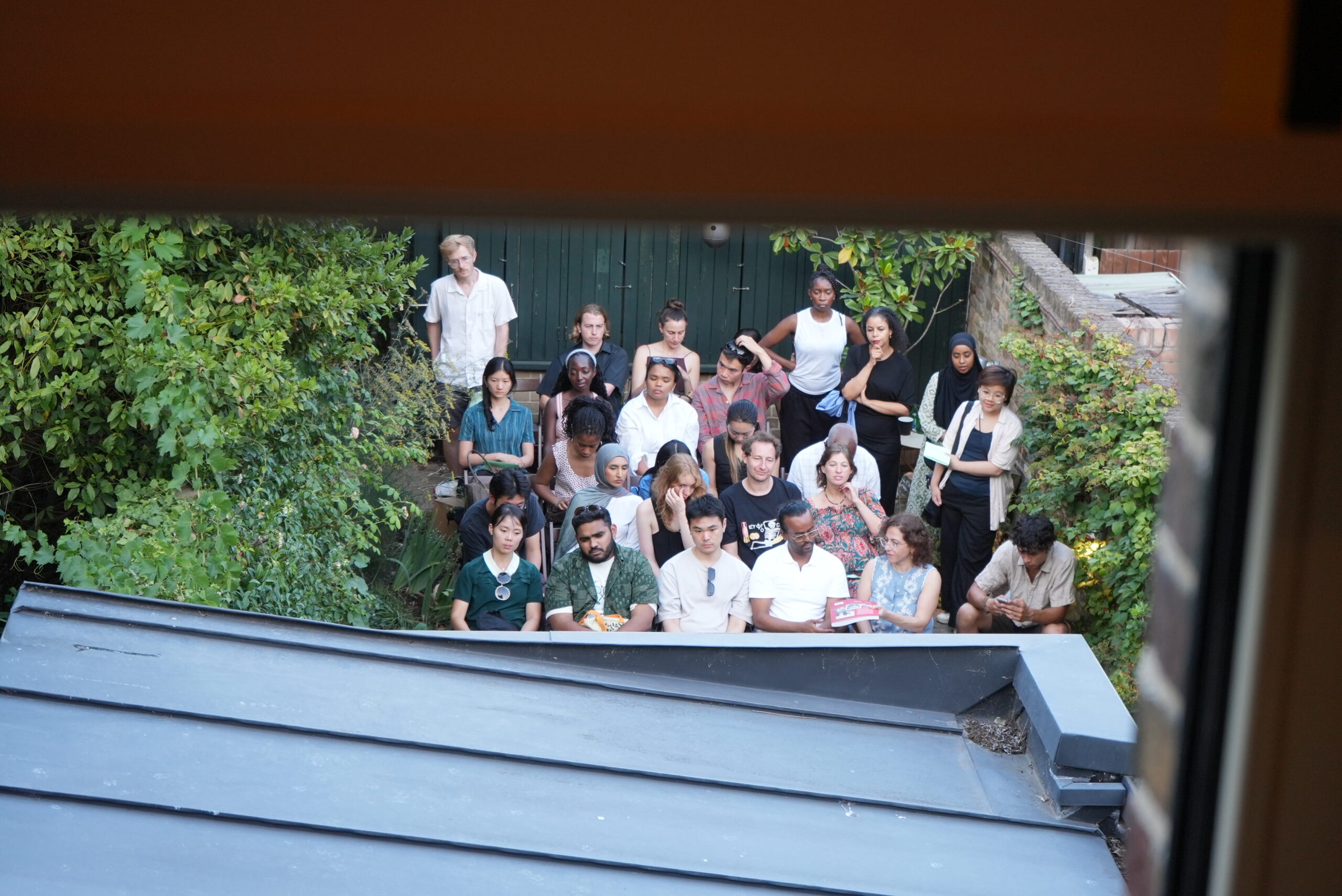
On 29 July 2026, Sam Elbahja, Serena Faizal, Suaad Jama, Minsung Son, Ninu Sonuga, Monzie Tan, Nyahalo Tucker and Kyiga Wilberforce hosted Housewarming, an evening of dialogues around the curation, authorship and legacy of house museums.
Held at the Van Gogh House in South London, where the eponymous artist lived in 1873, the event opened up the house museum as a cultural space that is inherently domestic, asking: How does a home return as a museum? Whose dwellings get to be preserved, and who decides? And what role might a house museum play in an era of housing crisis?
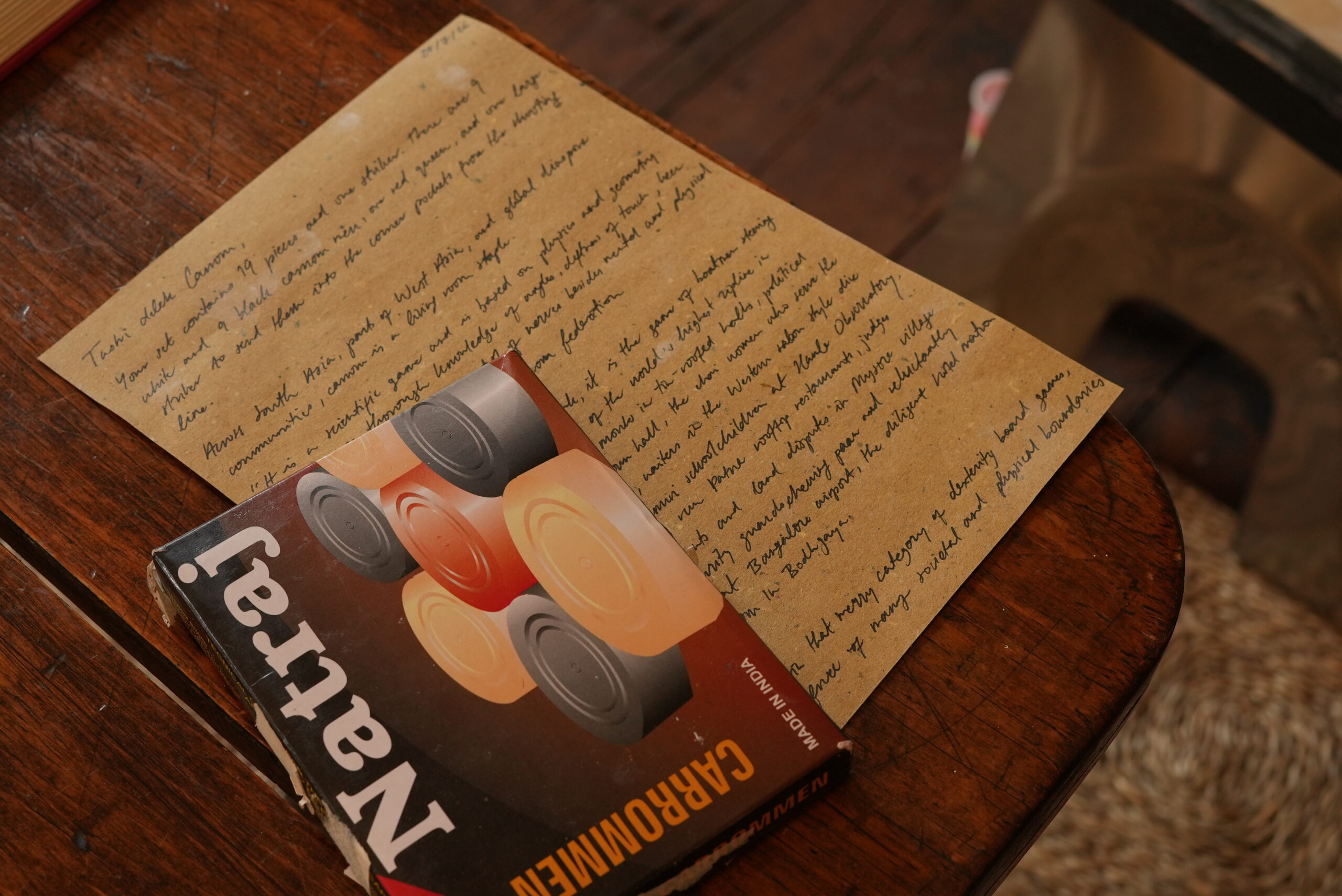
To set the scene, the cohort members brought objects from their own homes to place around the house, each carrying a story. While Suaad’s kabaan, a small Somali guitar, sat quietly in the corner, Kyiga’s carrom board gathered a group of friends around it. Next to each object was a letter the cohort member had written to it, mirroring the letter writing Van Gogh did at this very address.
Across three interviews, the cohort brought together speakers whose practices draw directly and indirectly from house museums, considering their mechanics and implications as sites that bridge – or further divide – social groups.
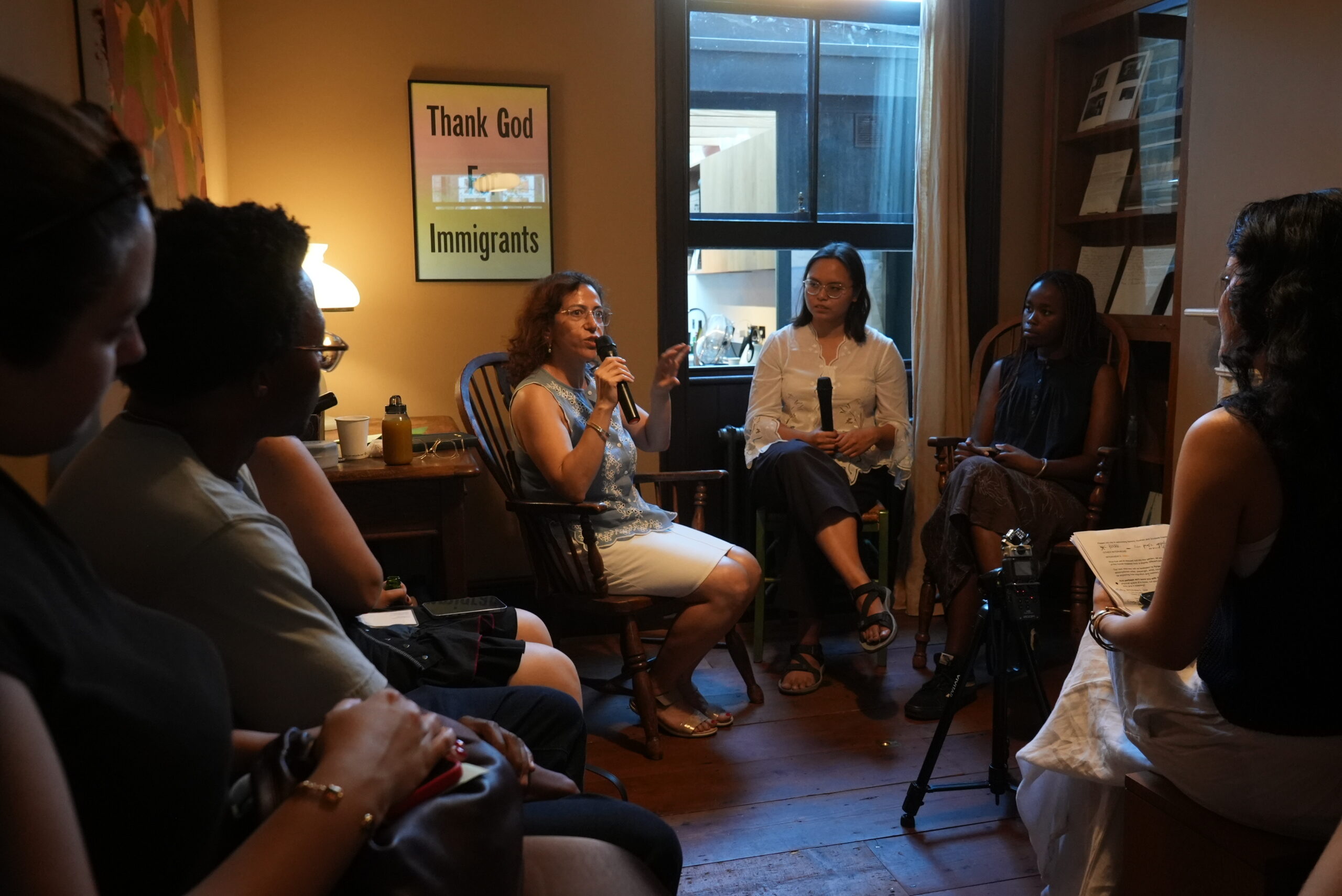
The first interview took place in the front room, where Soudade Kaadan, a Syrian filmmaker whose practice blends magical realism and dark humour against a backdrop of authentic Syrian experiences, was interviewed by Serena and Nyahalo. They spoke about Kaadan’s animated short film shown in Leighton House, and discussed how the objects of a house museum are able to speak or speculate on their origins. They explored topics of migration and displacement, and the inverse parallels between the people and objects who are displaced by colonial superpowers – where objects get to be shown whilst the stories of the people are hidden away.
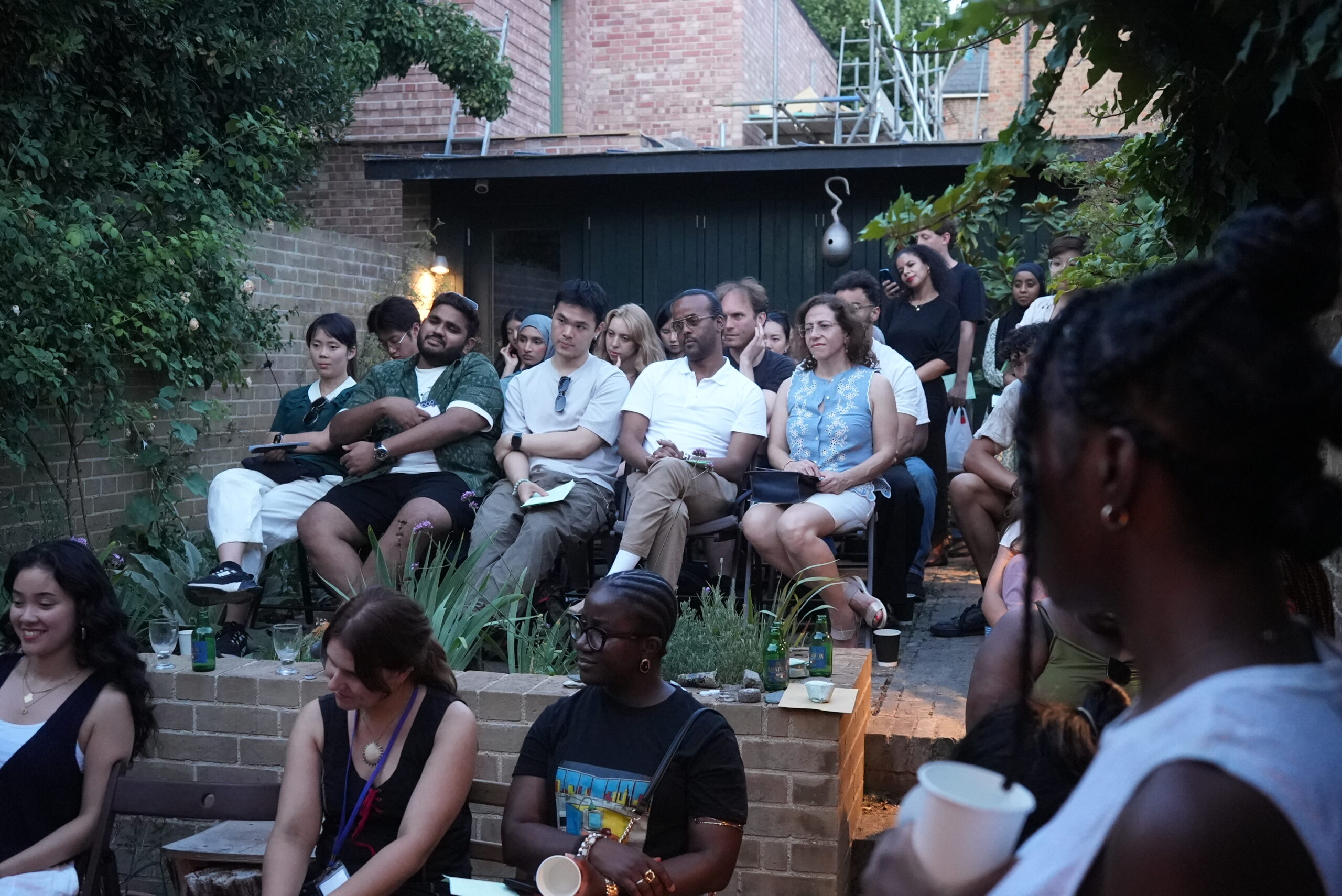
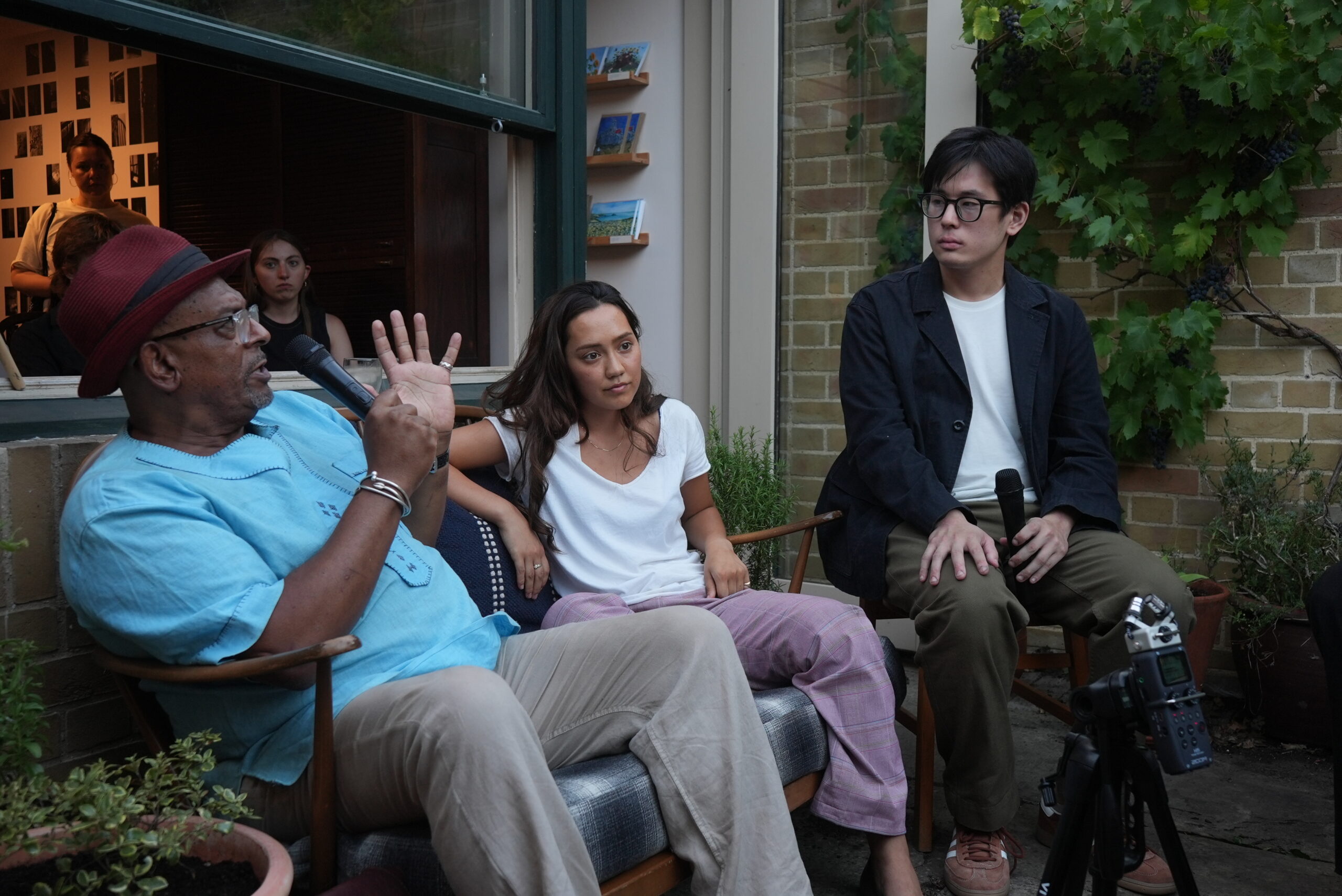
In the garden, Kyiga and Minsung interviewed Michael McMillan, an artist, theatre-maker and lecturer at University of the Arts London. Their conversation centred on the idea of speaking in tongues to different audiences, and how Michael’s seminal work The Front Room responded to the emergence of relocated aesthetics of the Windrush generation, and the false binaries of belonging, formality and comfort. An advocate for sociopolitical reckonings of space, Michael has continually worked within the challenge of representing migration without projection.
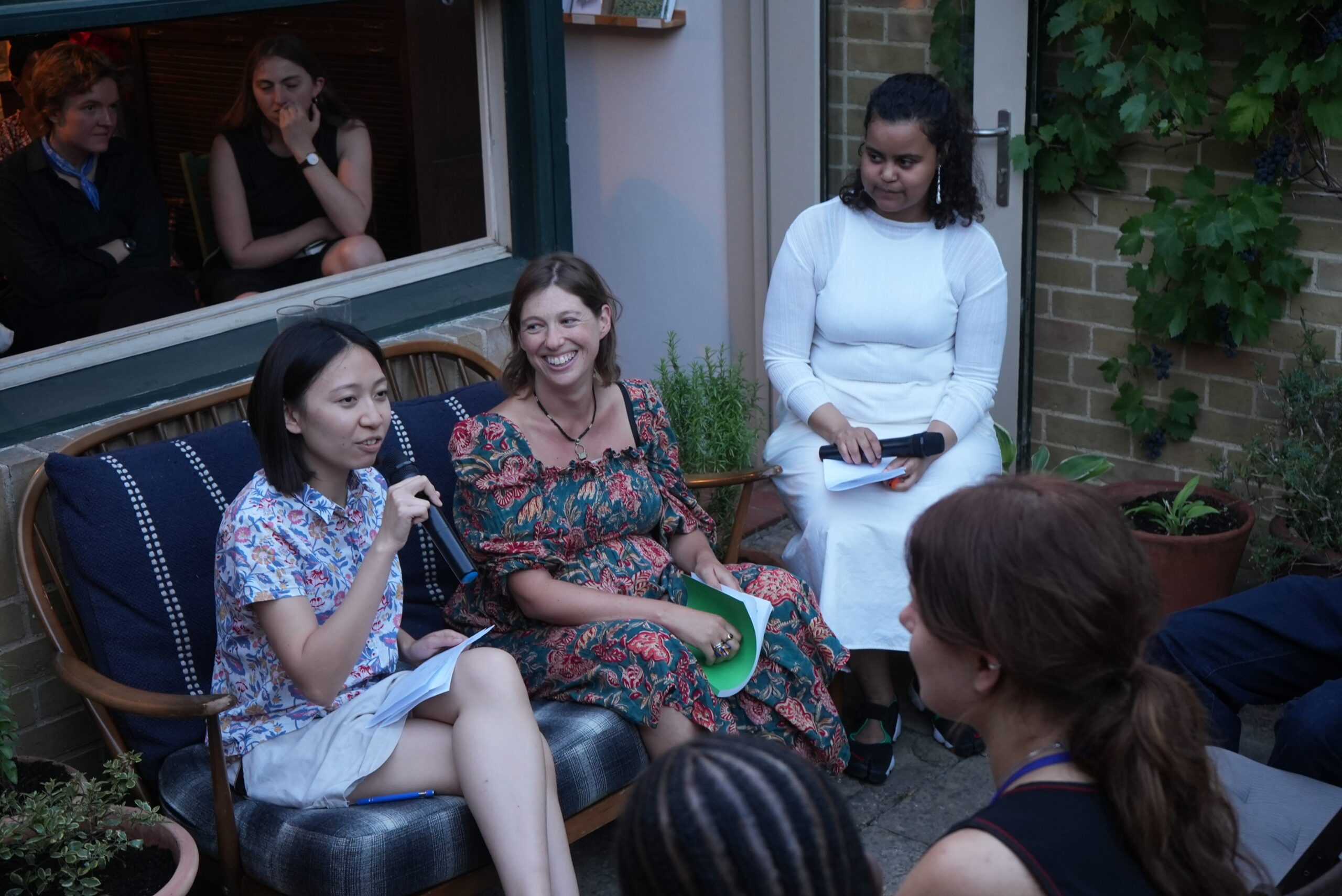
The final interview featured Suaad and Monzie in conversation with Sasha Galitzine, curator of Gerry’s Pompeii – a quirky canalside sculpture garden in West London by the late Gerrard Dalton. Their conversation explored the garden’s convivial events, such as ‘Gongoozling’ and ‘A Very Gerry Christmas’, foregrounding the idea that a house museum can encourage its local community to become active producers of culture. ‘Local rituals’ is the phrase Sasha uses to describe her work: she recounts musicians playing from balconies, and around 400 people turning out for a rainy Gongoozling, a parade of art and music along Grand Union canal, last October.
The intimacy of the full town house and its fifty-strong audience lent itself to an insightful Q&A, where most of the questions were directed to Michael – such as clarifying specific methods of ‘creolisation’ of the front room and appropriation of previously colonial domestic spaces.
‘The necessity of a subversive imagination was an unexpected common thread through each conversation’, reflected Kyiga. ‘We spoke about how formal and secular spaces are enriched by programming that works through transgression, improvisation of function, spirituality – and how this can be angled politically within house museums’. Worked through over the course of the evening, the opening question ‘How does a home return as a museum?’ was used as an anchor to enter and exit different social and historical dimensions of domestic life. In one light, homes and their things are essentially museums. Yet museums at their worst – soulless buildings defined by their unloved merry-go-round of objects – could not feel like a home. It is not objects that are missing, but people deciding where things belong – with a vision of relevance, constructive debate, and cultural direction.
Words by Kyiga Wilberforce, Monzie Tan and Serena Faizal